

-
-
-
-
-
-
News

-
-
Contact UsThe company focuses on the research, development, production, and sales of chemical raw materials and their formulations. All products have passed national GMP certification, and core products have successively passed official pharmaceutical regulatory certifications from multiple countries, including the EU EDQM, US FDA, Japanese PMDA, and South Korean MFDS. Following its successful listing on the Shenzhen Stock Exchange's ChiNext board on April 4, 2023, Keyuan Pharmaceutical has entered a phase of rapid development driven by both digital intelligence and capital, with its business spanning dozens of countries and regions worldwide.
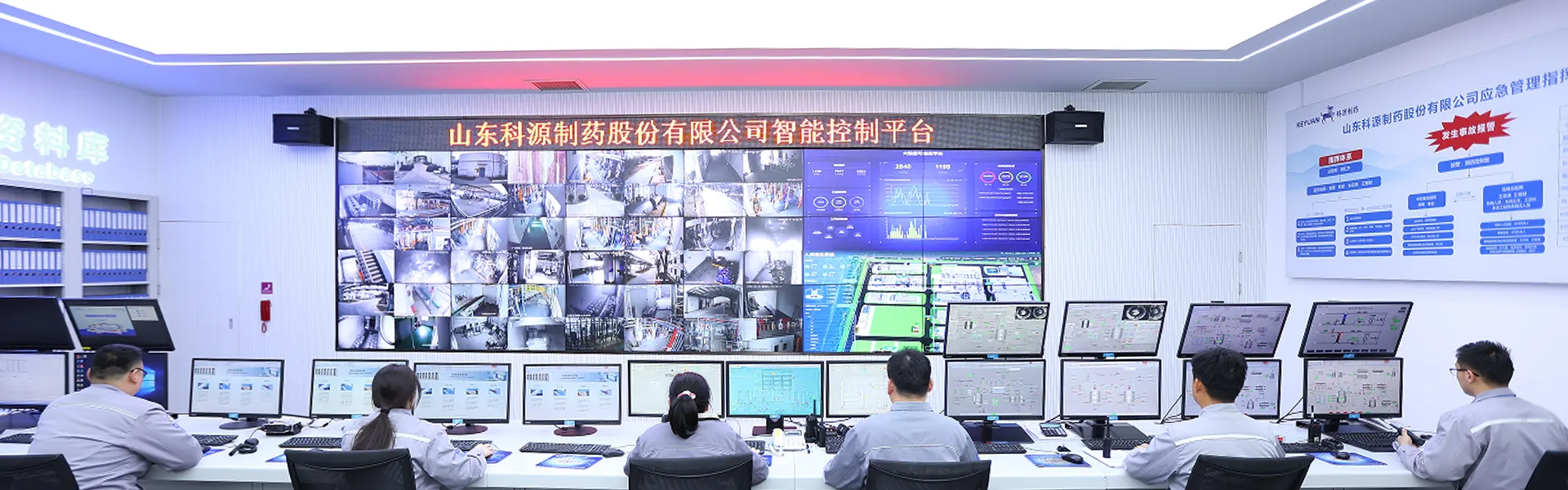
Device detection introduction
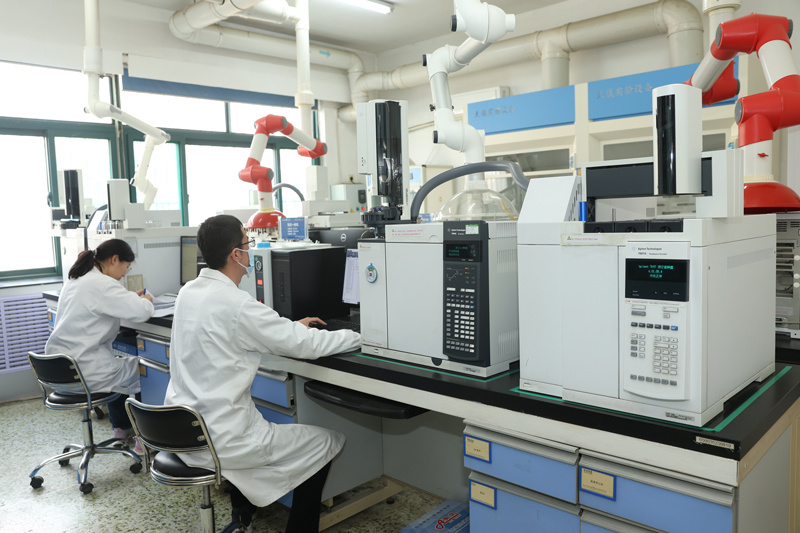
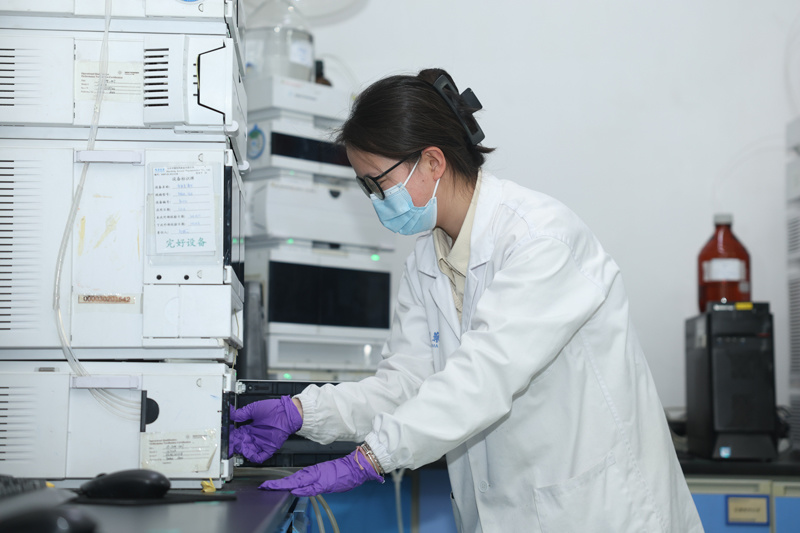
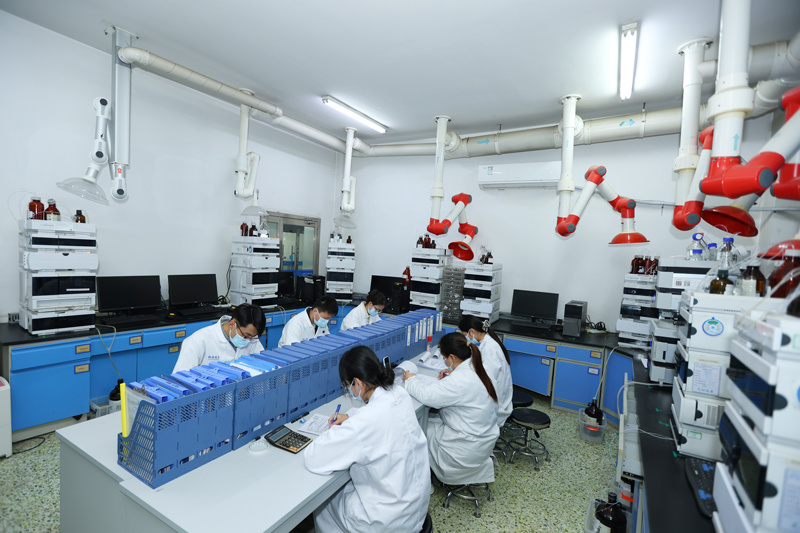
Our company laboratory possesses multiple advanced testing devices, including Liquid Chromatography-Mass Spectrometry (LC-MS), Gas Chromatography-Mass Spectrometry (GC-MS), High-Performance Liquid Chromatography (HPLC), Gas Chromatography (GC), Infrared Spectrometer, UV-Vis Spectrophotometer, electronic balance, etc. These devices provide accurate testing data for our company's product testing, ensuring reliable results. Specific introductions of each device are as follows:
Liquid Chromatography-Mass Spectrometry (LC-MS)
High-efficiency separation and high-sensitivity detection: LC-MS combines the high-efficiency separation capabilities of liquid chromatography with the high-sensitivity detection capabilities of mass spectrometry. This combination allows LC-MS to effectively separate and identify complex organic mixtures, particularly suitable for the analysis of thermally unstable and high-boiling point compounds.
Wide mass range: LC-MS systems have a wide mass range; for example, some models can cover a mass range from 50 to 4000 amu, allowing it to detect compounds of various molecular weights.
High resolution and accuracy: By employing advanced mass analyzer technologies, such as segmented hyperbolic quadrupole or Orbitrap detectors, LC-MS systems can provide very high resolution and mass accuracy, helping to accurately determine the molecular weight and structural information of compounds.
Rapid analysis: Modern LC-MS systems are compact, easy to operate, and can complete sample analysis within minutes, greatly improving work efficiency. In addition, the use of short columns further shortens the peak time while maintaining good separation.
Multifunctionality: In addition to basic qualitative and quantitative analysis functions, LC-MS also supports various advanced applications, including but not limited to proteomics research, metabolomics analysis, and pharmacokinetic studies. Its powerful data processing software also simplifies the workflow of complex data analysis.
Low sample consumption: Compared to traditional methods, LC-MS requires less sample, which is particularly important for precious or difficult-to-obtain samples.
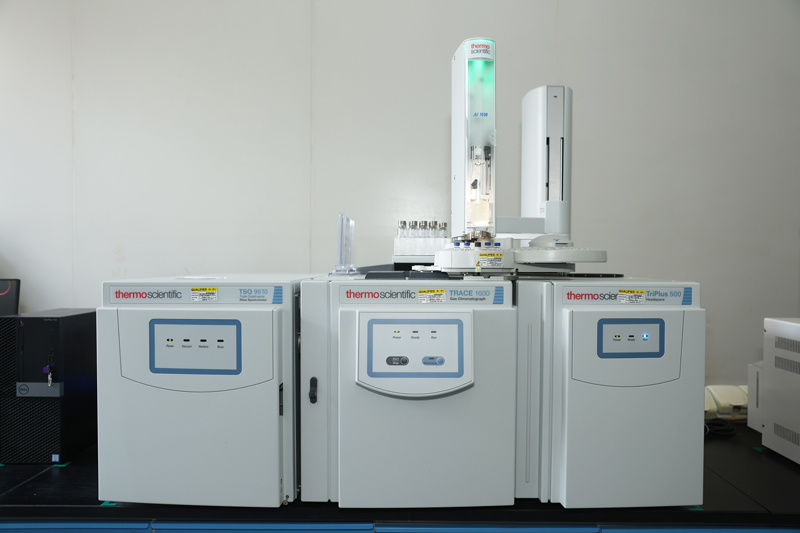
Gas Chromatography-Mass Spectrometry (GC-MS)
High-efficiency separation and precise identification: Gas Chromatography-Mass Spectrometry (GC-MS) achieves high-efficiency separation and precise analysis of compounds in complex samples by combining the high-efficiency separation capabilities of gas chromatography with the precise identification characteristics of mass spectrometry.
High sensitivity and selectivity: The GC-MS system is equipped with a high-sensitivity electron multiplier and advanced mass analyzer, capable of detecting compounds at extremely low concentrations and with high selectivity, suitable for trace analysis.
Advanced hardware design: The independently developed GC system features electronic flow and electronic pressure control (EFC, EPC), as well as a high-efficiency filament and pre-quadrupole mass analyzer. These designs effectively reduce contamination during the measurement process and improve the stability and reliability of the system.
Full-range vacuum monitoring: The system is equipped with a full-range vacuum gauge to monitor the vacuum status in real time, ensuring that the instrument operates in optimal condition and extending its service life.
Complete protection system: The GC-MS system has a complete protection mechanism that can protect key components under abnormal conditions to ensure the safe operation of the instrument.
Computer control system: Modern GC-MS systems use a highly integrated computer control system that can interactively control the entire analysis process, including data acquisition, processing, and analysis, improving the ease of operation and accuracy of data analysis.
High-Performance Liquid Chromatography (HPLC)
High resolution: HPLC can efficiently separate compounds in a sample, enabling the analysis and detection of complex mixtures, and has the characteristic of high resolution.
High sensitivity: HPLC equipment is equipped with a high-sensitivity detection system that can accurately detect trace components in samples, meeting the analytical needs of low-concentration components.
High reproducibility: HPLC has high reproducibility in analysis, ensuring the consistency and reliability of experimental results.
Wide range of applications: HPLC is not only applicable to chemistry, biochemistry, and pharmaceutical research, but also plays an important role in food science and environmental analysis.
Advanced technical characteristics: By using high-pressure systems, finer particle stationary phases, and sophisticated detection techniques, HPLC achieves higher separation efficiency and faster analysis speeds.
Flexible mobile phase selection: The range of mobile phase selection is wide and can be adjusted according to the needs of different samples to improve separation efficiency.
Diverse detectors: HPLC can be equipped with various types of detectors, such as UV detectors, fluorescence detectors, or mass spectrometers, to meet different analytical needs.
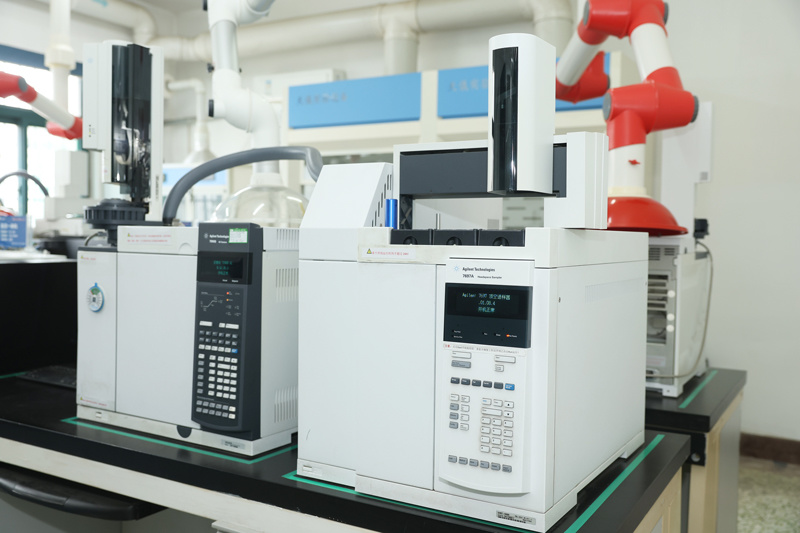
Gas Chromatography (GC)
High sensitivity and high resolution: Gas chromatography has high sensitivity and can detect trace substances at the ppm (parts per million) or even ppb (parts per billion) level. Comprehensive two-dimensional gas chromatography (2D GC) achieves orthogonal separation through two columns of different properties and a modulator, greatly improving sensitivity, resolution, and peak capacity.
Improved automation: Modern gas chromatographs widely adopt electronic pressure and flow control systems (EPC), such as Agilent 6890 and Shimadzu GC-2014 models, providing more reliable support for the reproducibility, optimization, and automation of chromatographic conditions. In addition, the new generation Nexis GC-2030 gas chromatograph also has automatic operation functions, such as pre-aging, making the analysis results more stable and reliable.
Development of combined technologies: The combination of gas chromatography with other analytical techniques, such as gas chromatography-mass spectrometry (GC-MS) and gas chromatography-infrared spectroscopy (GC-IR), further improves analytical accuracy and sensitivity, provides richer analytical information, and helps to more accurately analyze the components in complex samples.
Improved intelligence level: With the development of computer technology and artificial intelligence technology, the automation and intelligence level of gas chromatographs are constantly improving. For example, the LabSolutions Direct remote access tool allows remote control and monitoring via smartphones or tablets.
Infrared Spectrometer
High sensitivity: Advanced infrared spectrometers, such as the Bruker Tensor Ⅱ, have excellent sensitivity, capable of detecting trace samples and ensuring the accuracy of analytical results.
Fast scanning: These instruments have high-speed scanning capabilities, allowing them to obtain complete infrared spectra in a short time, improving work efficiency.
High accuracy: Infrared spectrometers have extremely high accuracy and can be used for qualitative and quantitative analysis, providing reliable experimental data.
Multi-channel Measurement: Fourier Transform Infrared Spectrometer (FTIR) employs multi-channel measurement technology to improve the signal-to-noise ratio and enhance instrument sensitivity.
High Light Throughput: The higher light throughput of FTIR further improves the instrument's sensitivity and detection capabilities.
Precise Wavenumber Value: The wavenumber value accuracy of Fourier Transform Infrared Spectrometers can reach 0.01cm-1, ensuring high data accuracy.
Wide Spectral Range: Some near-infrared spectrometers cover multiple wavelength ranges, suitable for different types of sample analysis, such as the Mystery Generation near-infrared spectrometer.
Non-destructive Testing: Near-infrared spectroscopy technology does not damage the sample during measurement, meeting the needs of modern analysis for sample protection.
Simple Sample Preparation: This technology requires almost no sample pretreatment, simplifying the analysis process and improving work efficiency.
Simultaneous Determination of Multiple Components and Channels: A single spectrum can obtain information on multiple components at once, enabling efficient and comprehensive analysis.
Ultraviolet-Visible Spectrophotometer
High Sensitivity and Accuracy: Ultraviolet-visible spectrophotometers provide highly sensitive measurement results, thanks to their precise optical systems and advanced data processing technology. Research into the synthesis and application of new chromogenic agents further improves the sensitivity of elemental determination.
Wide Wavelength Range: These instruments typically cover a wide wavelength range from ultraviolet to visible light (e.g., 190-1100nm), making them useful in a variety of applications.
User-Friendliness: Most modern UV-Vis spectrophotometers are designed with user-friendly interfaces, making them easy and intuitive to operate. They are also equipped with automatic fault diagnosis and power-off protection to improve usability and reliability.
Powerful Data Analysis Capabilities: These devices have built-in quantitative analysis software that supports various functions such as photometric analysis, quantitative analysis, and kinetic testing. They also provide standard printer interfaces and RS-232 communication interfaces for convenient data output and recording.
Portability and Miniaturization: With technological advancements, portable and even handheld UV-Vis spectrophotometers have emerged, greatly expanding their application scenarios.
Electronic Balance
Sensor Technology: The core technology of electronic balances relies on high-precision sensors. For example, the XP-L series uses a high-speed single-module weighing sensor to improve weighing speed and overload capacity. Mettler Toledo balances use electromagnetic sensor technology to provide microgram-level accuracy (±0.1 µg to ±1 mg), ensuring long-term stability. In addition, some models integrate temperature and humidity sensors to reduce the impact of environmental changes on weighing results.
Automatic Calibration and Internal Calibration Functions: Most electronic balances support automatic calibration, such as through built-in programs or E-Loader software for quick calibration. Internal calibration balances automatically correct according to preset conditions, while external calibration balances require manual use of standard weights. Sartorius balances further provide full-linear four-point calibration to enhance accuracy.
Environmental Adaptability Control: The balance uses a level control system to monitor and alert to tilt status in real time, and anti-vibration design (such as anti-vibration balances) reduces vibration interference. Windshields (such as the BL-F series and ES320's transparent windshields) reduce the impact of airflow. The Mettler HE83 also has an automatic energy-saving mode to reduce energy consumption when idle.
High Precision and Fast Response: Electronic balances achieve high-precision weighing through the principle of electromagnetic force balance. For example, the XP-L series has extremely low repeatability error, while precision electronic balances (such as the BL-F series) can achieve 0.001g readability. The dynamic weighing function (such as the AND GX series) supports real-time tracking of weight changes in moving objects.
Multifunctional Applications: Built-in applications include percentage weighing, density determination, piece counting, etc. Some models support live weighing and bottom hook weighing (such as ES10000 and ES320). Statistical weighing and cumulative weighing functions improve data processing efficiency.

Address: No. 26, Keyuan Street, Shanghe County, Jinan City, Shandong Province
Free Service Hotline